May 4, 2026
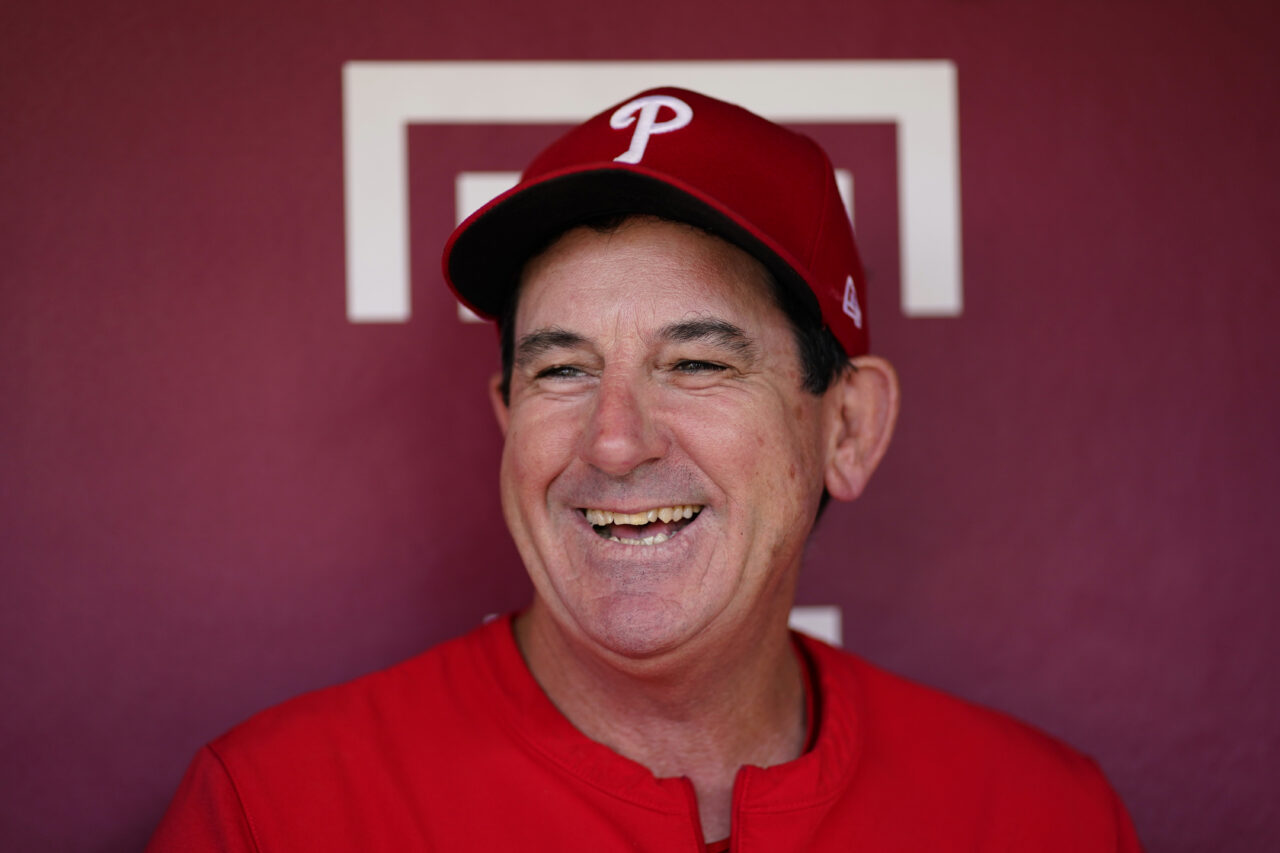
If you want a modern insight into how sports in Philadelphia works, you need look no further than the firing last week of Phillies manager Rob Thomson.
By any logical measure, Thomson should not have survived his historic gaffe of removing Zack Wheeler from a playoff game in 2024 against the Mets while the ace was throwing a one-hitter, or his equally clueless decision to bunt in the playoffs against Los Angeles last fall.
Why did he make it through almost four entire seasons? Why did no media member — present company excluded, of course — even suggest that he was getting diminishing returns with a roster expected to challenge for a championship? And why did Thomson break tradition and talk with the media after his dismissal last Tuesday?
It’s simple. He was, is and will always be a very nice man. He treated everyone with respect. He made friends everywhere he went, home and away, with his ready smile and his unassuming style. In a pressurized Philadelphia sports world, he never publicly had a cross word with anyone. (Privately, too, in all likelihood.)
None of that should matter in evaluating a manager, especially in Philly, but clearly it did with Thomson. The fact that he consistently bungled big strategic moments because of his religious adherence to analytics made no difference to his potential critics. He was nice, in good times and bad. Nowadays, that buys a coach or manager some extra time.
And even at the end of his only chance to manage a big-league team – after 40-plus years in baseball – he flashed that winning smile and walked out with no apparent regrets.
He took it like a man. A nice man.
“I think if you’re an accountable person and you’re a leader, you’re going to stand up in front of people and answer the questions when it’s all over,” he said. “And I just wanted to make sure I did that in the right way.”
By the time GM Dave Dombrowski handed Thomson his long overdue pink slip, there was really no choice. A $300-million roster does not ever accommodate a 9-19 record. A lineup with big names like Bryce Harper and Kyle Schwarber, along with a rotation featuring Wheeler and Christopher Sanchez, simply cannot ever be 9-19.
So Dombrowski made the inevitable move. Good for him.
But then he handled it clumsily. Bad for him.
First, as the vultures were circling Citizens Bank Park, Dombrowski issued a bogus vote of confidence just a few days before the big move, for no good reason. We later learned he was contacting his old pal, ousted Boston manager Alex Cora, right around the same time he was publicly supporting Thomson.
And then Dombrowski offered a startling contrast to his ex-skipper when he refused to answer a question about how much blame the GM deserves for his dubious roster construction.
“You can answer that question,” he snapped. “I’m not going to get into that.”
Huh? If the GM cannot explain his roster philosophy, who can? If he can’t reiterate why he thought it was a bright idea to “run it back” after a disappointing 2025 post-season, who can? And if he’s getting testy with a media that has done everything but shine his shoes during his five-year tenure here, who is this man?
Well, he’s not as nice as Thomson. There’s no doubt about that.
And, whether he realizes it or not, now that Thomson is not there to shoulder the blame, guess who’s next in the pecking order?
Dombrowski, that’s who. In fact, snapping at a docile media is just downright stupid. It may be the only way in our city to get these forgiving souls with notepads and microphones to do their jobs and hold our sports figures accountable.
The truth is, replacing Thomson with interim manager Don Mattingly — or anyone else who puts down the stats binder and uses his brain in that Phillies dugout — was the right move. Who knows? It might even work. It’s a safe bet that the Phils were going nowhere with Thomson.
If nothing else, at least the ex-skipper forced a redefinition of the old maxim that nice guys finish last.
They don’t. We know that now.
They just don’t finish first.
If you heard a howl of triumph on the 13th floor of the Westin Hotel in Boston late last Wednesday night, I plead guilty. I hadn’t screeched with glee like that since the last play of Super Bowl 52 eight years ago.
I happened to be in Beantown on a short vacation with my wife Gail when the Flyers completed their improbable upset of the far more experienced Penguins with an overtime goal by Cam York after more than 77 pulsating minutes of playoff hockey. York’s goal was the only one scored in the decisive Game 6.
(I know, I know. I said last week I didn’t like hockey, and now I’m using the word pulsating to describe a game. Since then, I discovered that I enjoy hockey when my team wins. Sue me.)
And if you’re ready to spring for a Flyers jersey to replace that moth-eaten Bill Barber sweater, I strongly recommend No. 80. Goalie Dan Vladar was brilliant in the series clincher, stopping all 42 shots.
My favorite two moments other than the decisive goal in Game 6 were the two times the camera captured my old WIP partner, president Keith Jones, at the top of the arena in a box with GM Danny Briere.
In the first shot, before the goal, I swear it was the only time I have ever seen Jonesy looking nervous. The word unflappable was invented for him.
After the goal, the camera caught him again, this time staring down at the celebration with only a slight smile. I tried to read his mind, and all I could come up with was him thinking, “Man, I didn’t expect this. Is it possible I actually know how to do this job?”
Yes, it is possible. Jonesy joined our show with zero experience in radio, and he adjusted to the duties of the job as a co-host faster than anyone I ever worked with. Instinctively, he knew what to do and when to do it.
My guess is, he’s the same way running the Flyers. Clearly, he allows Briere and his other underlings to do their jobs without second-guessing. Clearly, he is smart enough to know when to assert his authority and when to keep his mouth shut. Clearly, he is much savvier than his radio persona.
I have been a sports fan for most of my 75 years, and I can say without a moment’s hesitation that no one deserves success more than Keith Jones.
Congrats, Jonesy.
Often after a show, Keith would say, “Well, we fooled ‘em again.”
Who knew that my old pal would still be fooling ‘em so many years later?
——————————————————————————————————————————————————————————————————————————————————————————————————————————————————–
If it seems odd to you that I placed at the end of this blog my thoughts about the remarkable comeback that moved the Sixers past the Celtics and into the second round of the playoffs, well, that’s because it is. Please let me explain.
One lesson I learned early in my talk-radio career was not to ruin a good party. If the listeners are basking in the glow of a huge win, don’t diminish their enjoyment with unwelcome negativity. This challenge is especially tough when you’re trying to express what you’re honestly feeling.
Yes, what the Sixers did was delightfully unexpected for their long-suffering fans, but – despite a lifelong love for the team – I found little joy this time in crushing the hopes and dreams of a hated rival.
For me, it was ruined by the grating presence of Joel Embiid performing his bogus act again for the TV cameras.
I just can’t stand the guy, regardless of the final score.
As I predicted on this blog the past two weeks, Embiid returned from appendicitis surgery just in time to play the role of savior. And it’s undeniable that his talent was a major factor in his team’s comeback from a 3-1 deficit in games.
But watching Embiid is tantamount to waterboarding for me these days, with his constant preening for the cameras, his petulance after pretty much any officiating call involving him, and his phony theatrics at the end.
If you were watching closely, Embiid started limping only after the 109-100 win was secure, hobbling through the last minute or so for no reason other than to ramp up the drama and to steal the spotlight.
Of course, if you were watching closely, you also know that the real hero in the pivotal moments was Tyrese Maxey. After Embiid bricked a couple of late three-point shots during a desperate Boston comeback, Maxey took over the offense with several bold drives for big baskets.
At the end, Maxey was not limping. His heroics required no embellishment. Embiid couldn’t help himself. In fact, later that night, he even confessed to his bogus behavior.
“I feel great,” he said. “I feel amazing. I was faking.”
No one saw fit to ask him why. No one needed to ask, really. They are already well aware that he is an incurable attention whore.
I hope the Sixers overcome Embiid’s selfishness and win the championship this season after a drought of 43 years. The fans deserve it. The city needs an NBA championship. Maybe this indeed is the year.
I doubt it, but then you know that already. My skepticism is equally incurable. I will be watching, but not with the sense of anticipation I felt during the Flyers’ improbable first-round win.
Sixty-five years ago, when I was 10, I fell in love with a big man who had many annoying quirks of his own, Wilt Chamberlain. One of the biggest thrills of my life was getting to meet my boyhood hero in 1992. Wilt remains the greatest athlete I have ever witnessed, decades after his passing. He is the biggest reason I have always (until now) rooted for the Sixers.
This season, after many years of ambivalence, I reached the point of no return with Joel Embiid. He did something I didn’t think was possible. He made me no longer care about my favorite NBA team.
So please enjoy the next round against the Knicks, and maybe even Embiid’s first trip to a conference final in the 12th season of his enigmatic career.
Yes, I will definitely be watching, but I will no longer be rooting.
This is my problem, not yours. I offer my opinion here only because otherwise I would have to do what Embiid does shamelessly at every opportunity.
I would have to fake it.